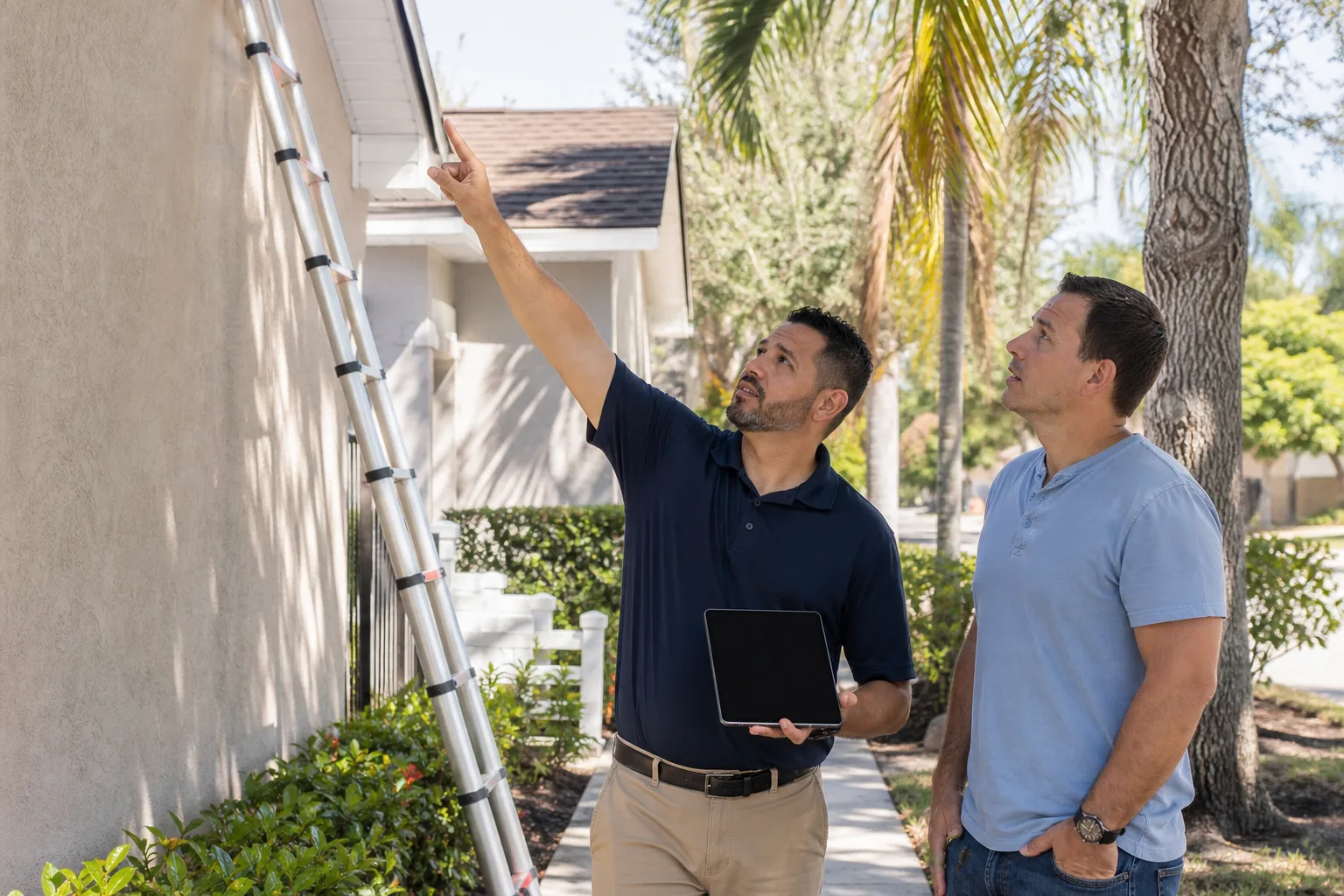
Last updated November 18, 2026



Free written scope consultation - allowances, timeline, and change-order rules on paper before a single trade is scheduled
How to Hire a Construction Contractor in Whitney: A Step-by-Step Guide
Most homeowners in Whitney start their contractor search by checking a license number. That’s a good instinct, but it’s an incomplete one. Nevada does require contractor licensing through the State Contractors Board, and a valid license is worth confirming. What that license won’t tell you is whether the contractor has ever pulled a permit inside Clark County’s unincorporated zones, where Whitney sits and where inspection sequencing runs on its own calendar. A contractor can be fully licensed and still fumble the permit pathway on your street. This guide walks you through the questions, checks, and comparisons that actually separate a qualified Whitney contractor from one who just looks the part on a website.
Quick Answer
To hire a construction contractor in Whitney, verify three things in order: a current Nevada State Contractors Board license with the right classification for your scope of work, a permit history that shows the contractor has actually pulled and passed inspections in Clark County’s unincorporated areas, and a written scope that names every trade, material, and brand involved so subcontracting stays visible. Then compare bids line by line, not by bottom-line price. The strongest contractor is usually the one whose paperwork is the most specific.
Styles & brands we work with
- Kitchen remodeling
- Bathroom remodeling
- Home additions & ADU
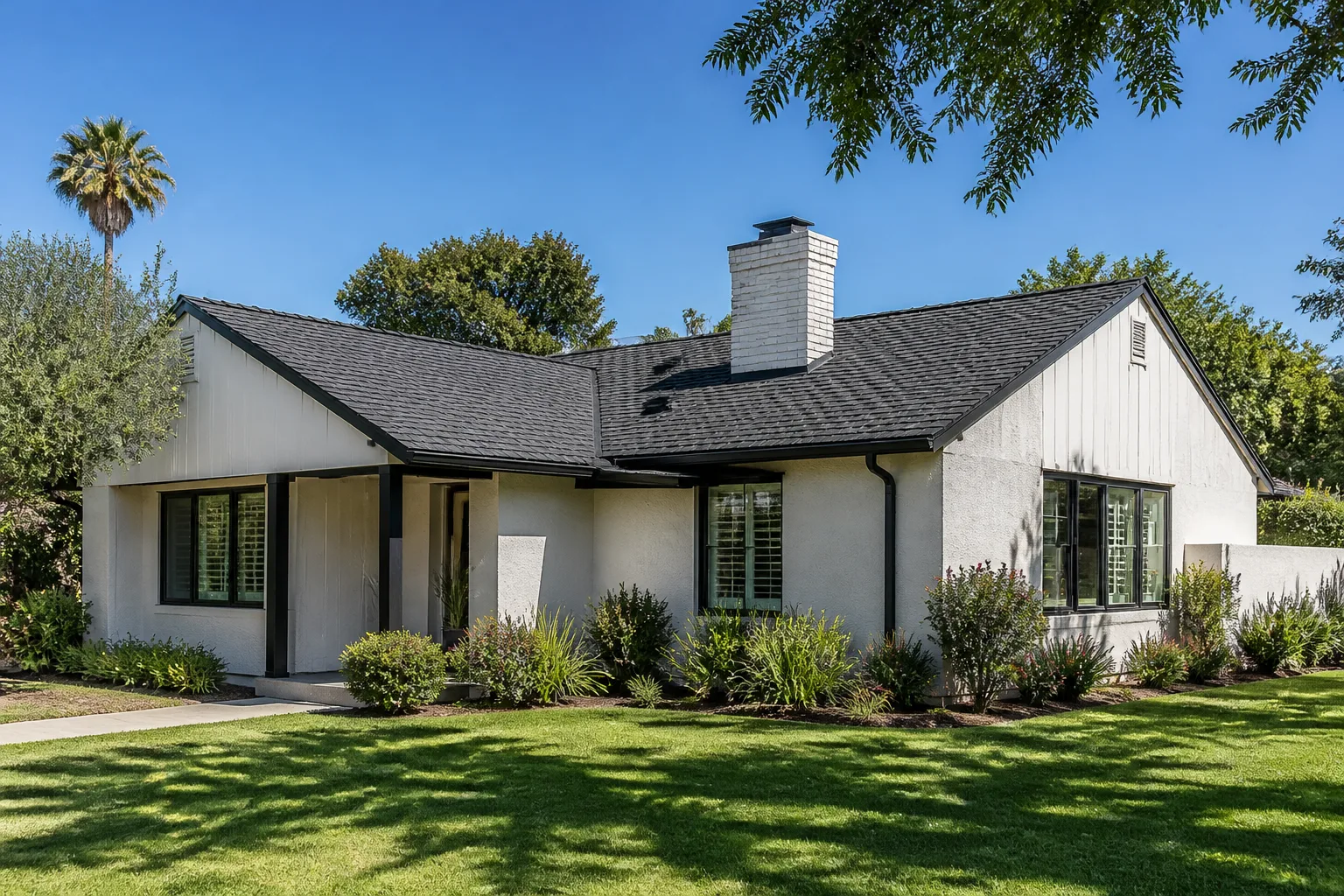
- Roofing
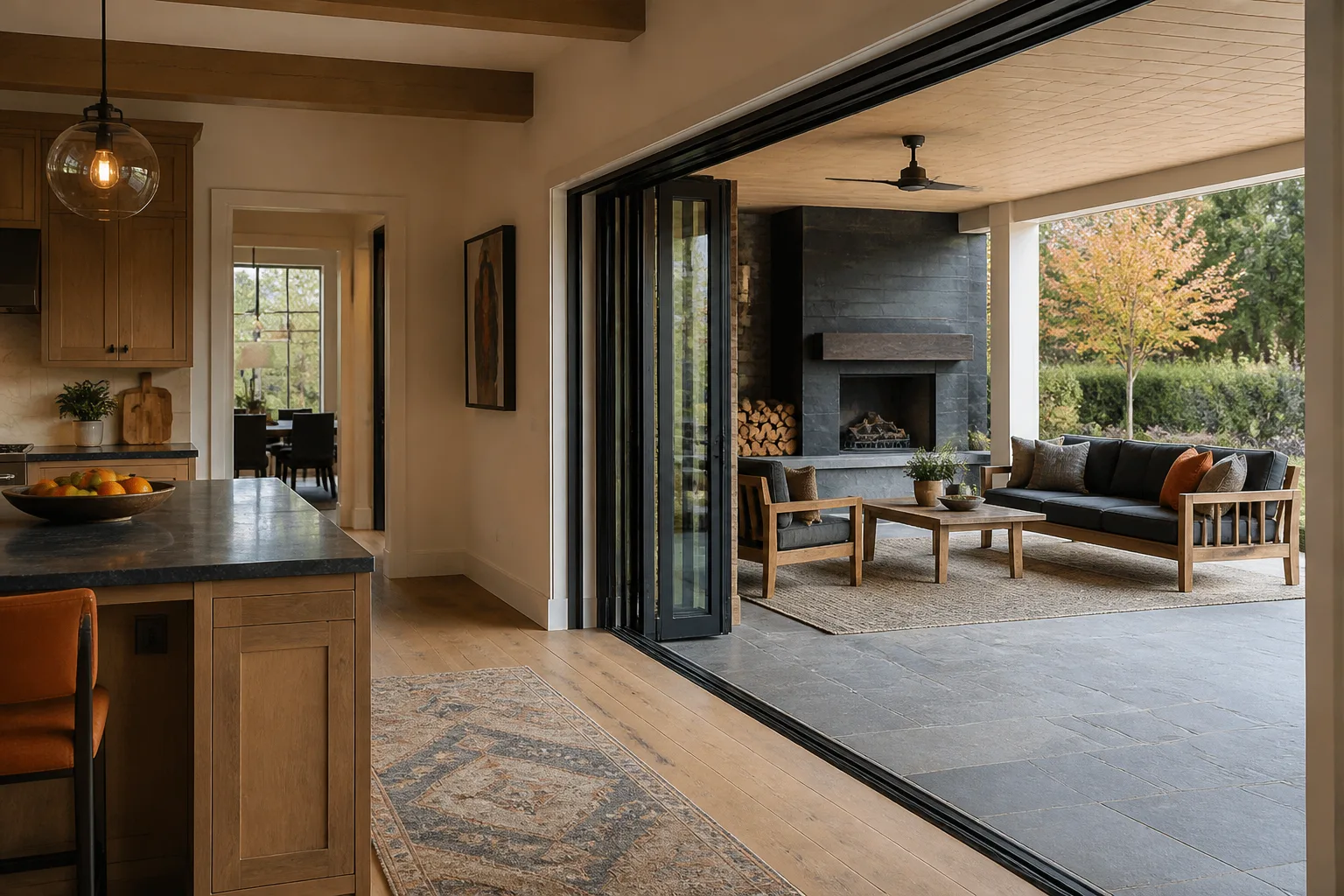
- Windows & doors
- Driveway & pavers
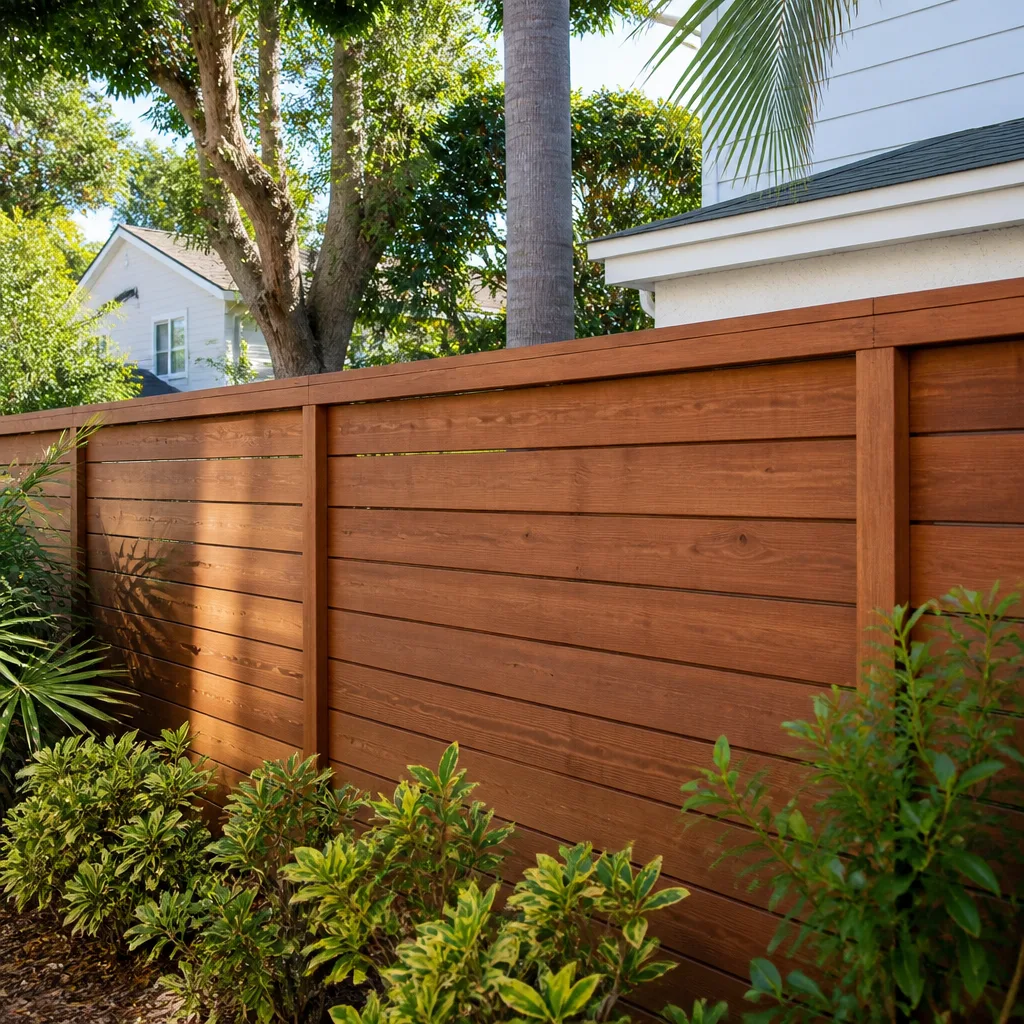
- Fence
Table of Contents
- Nevada Licensing vs. Clark County Permit History: Why You Need Both
- Five Interview Questions That Reveal Local Knowledge
- Materials, Lead Times, and Whitney’s Desert Build Calendar
- Reading a Scope of Work for Subcontracting Red Flags
- Why Broad Brand Access Lowers Change-Order Risk
- How to Compare Bids When Every Scope Is Written Differently
- HOA Submission and Inspection Sequencing in Whitney
- Contract Terms Worth Insisting On
Nevada Licensing vs. Clark County Permit History: Why You Need Both
A Nevada State Contractors Board license verifies that a contractor has met the state’s requirements for the classification of work they perform. It tells you they’re legally allowed to contract for that work. It does not tell you whether they’ve navigated the Clark County permit process for a project like yours in an unincorporated community, which is exactly what applies to most of Whitney. These are two separate checks, and the second one is where projects quietly stall.
Clark County handles permitting and inspections for the unincorporated areas, which includes Whitney. That means the county’s building department, not the city of Las Vegas, is the authority reviewing your plans, scheduling your inspections, and signing off on your final. A contractor who works mostly inside incorporated city limits may be perfectly competent and still unfamiliar with how Clark County sequences rough framing, electrical rough-in, and drywall inspections on an addition.
Here’s how to check both:
- Confirm the state license. Ask for the license number and the classification. The classification matters because it defines what work the contractor can legally perform. A residential classification doesn’t cover everything, and a contractor working outside their classification is a real problem.
- Ask for permit history, not just references. Request addresses or permit numbers from two or three recent projects in unincorporated Clark County. A contractor who has genuinely done this work will produce them without friction.
- Call the county yourself. The Clark County building department can confirm whether a permit was pulled, what stage the inspections reached, and whether any corrections were issued. This is public information and it’s the single most underused vetting step we see.
- Cross-check the classification against your scope. If your project involves structural work on a home addition, the license classification needs to match. Ask the contractor to explain which classification covers your project and why.
In our experience, the gap between licensed and locally-permitted is where homeowners get burned. A contractor who has never pulled a permit in Whitney’s unincorporated zones is learning your project’s inspection sequence on your dime. That’s the distinction worth pressing on before you sign anything.
Five Interview Questions That Reveal Local Knowledge
Anyone can say they know Whitney. The right questions force specifics. Ask these five on the first call, and listen for detail rather than confidence. A contractor who actually knows the local process will answer in particulars; one who doesn’t will answer in generalities and pivot to price.
- “Which building department signs off on my inspections, and what’s the typical sequencing for a project like mine?” The correct answer names Clark County and describes a rough order – footings, framing, rough trades, insulation, final – adjusted for your scope. Vague nods at “the city” are a tell.
- “How do you handle HOA architectural submissions in Whitney, and who prepares the package?” Whitney has HOA-governed neighborhoods, and HOA architectural review often runs on a separate timeline from the county permit. A contractor who treats the HOA as an afterthought will stall your start date.
- “Walk me through how you schedule materials for a project that starts in summer.” Desert heat affects concrete pours, exterior finish work, and crew scheduling. Contractors who build in Whitney know that timing is a real constraint and plan around it.
- “Which parts of my project will be subcontracted, and how will I know who’s on site?” Every general contractor uses subs. The question is whether the handoff is visible to you or buried. The answer should name trades and describe how they’re managed under your contract.
- “If a brand I want isn’t in your standard catalog, what happens?” This filters for sourcing flexibility. A contractor with narrow supply relationships will push you toward what they carry; one with broad manufacturer access will figure out how to get what you actually specified.
These five questions do more vetting than a dozen generic reference calls. If a contractor answers all five with specifics, you’ve found someone who has done this in Whitney before.
Materials, Lead Times, and Whitney’s Desert Build Calendar
Whitney’s climate shapes a construction schedule in ways that don’t show up on most bid comparisons. Summer heat governs when concrete can be poured, how early crews start, and how exterior finishes cure. Wind and dust in the spring affect exterior work and paint. The material lead times that flow into those windows are just as important as the labor schedule, and they’re the part homeowners rarely ask about until a delivery slips.
The practical implication is that a contractor who stocks or sources broadly can compress the schedule, while one with limited supply chains will push dates. That distinction shows up across every category of work. Hardscape and driveway projects depend on paver availability; fencing depends on panel and post supply; a kitchen depends on cabinet and countertop lead times; a roofing project depends on shingle and membrane availability from the manufacturer whose system is specified.
Ask each bidder these questions before you compare numbers:
- Which specific materials are specified, by manufacturer and product line, and what are the current lead times?
- If a specified product is backordered, what’s the substitution process, and do I have approval rights?
- How does the schedule account for Whitney’s summer heat and spring wind when pouring or finishing exterior work?
- Which materials can be staged on site, and where will they be stored?
Broad manufacturer access matters here for a simple reason: when a contractor works with dozens of name-brand partners across categories, a single supply gap doesn’t sink the schedule. A contractor whose catalog is narrow is more likely to hand you a change order because the specified product “wasn’t available.” That’s a scheduling problem dressed up as a supply problem.
Reading a Scope of Work for Subcontracting Red Flags
The scope of work in your contract is where most disputes are born, and the language that causes trouble is usually not the obvious kind. It’s the paragraph that says “electrical and plumbing by licensed subcontractors” without naming who, or the one that describes “standard cabinetry” without a brand. These phrases let a contractor subcontract critical trades and swap materials without homeowner visibility, and they leave you with no leverage when something goes sideways.
Read your scope looking for these red flags:
- Unnamed trades. If electrical, plumbing, or HVAC will be subcontracted, the scope should say so and describe how those subs are managed under your single contract. Silence here is a visibility problem.
- No brand or model specified. “Premium countertop” means nothing. “Engineered stone by a named manufacturer” means something you can verify. Every material line should name a manufacturer and product line, or explicitly describe the selection process and how substitutions get approved.
- Vague allowances. A materials allowance is a number the contractor can spend on your behalf. An oversized allowance with no brand specified means you’ll be asked for more money later, or you’ll get the cheapest option that fits.
- Change-order language without a fixed process. A well-written scope describes how changes are priced, approved, and documented in writing. “Change orders as needed” is not a process.
- Missing permit responsibility. The contract should state clearly who pulls the permit and who is responsible for inspection corrections. Ambiguity here is expensive.
- No finish schedule. Cabinets, countertops, tile, fixtures, and hardware should all appear by brand and model. If they don’t, your “specification” is a wish list.
The reason this matters in Whitney specifically is that a project spanning multiple categories – say a bathroom remodel and a new fence, or a kitchen and a roof – can hide a lot of subcontracting under a single very long scope. Ask the contractor to walk you through which trades are in-house, which are subcontracted, and who holds the sub’s contract. If the answer gets fuzzy, that’s the friction point.
For homeowners planning broad multi-trade projects, a single-contract structure with one accountable party is the cleanest answer. We built our service model around that idea, and it shows up in how we write scopes: every trade is named, every material is specified, and every category is covered under one agreement. If you want to see how that reads across categories, our driveway & pavers scope and our fence installation scope are useful comparisons, because exterior work tends to expose subcontracting gaps quickly.
Why Broad Brand Access Lowers Change-Order Risk
Material selection sounds like a design question. In practice, it’s a risk-management question. Contractors with access to a broad roster of name-brand materials can specify what you actually want, which reduces the chance that a supply gap forces a substitution and a change order. Contractors with narrow catalogs specify what they carry, and you discover the limitation later in the project when the “upgrade” costs more.
What broad access looks like in real terms:
- Roofing systems from a full roster of manufacturers rather than a single-house brand, so your shingle, underlayment, and warranty stay in one system.
- Kitchen and bath cabinetry from established cabinet makers, paired with engineered stone surfaces from a range of premium countertop brands.
- Plumbing fixtures and hardware from recognized fixture manufacturers rather than house brands you can’t cross-shop.
- Windows and doors including impact-rated options where your design calls for them, alongside standard and energy-efficient lines.
- Hardscape and fencing from name-brand paver and fence manufacturers, so the exterior is as specification-driven as the interior.
When prefab is part of the plan – an accessory dwelling unit or a home addition built on a modern prefab platform – the sourcing question changes. A contractor working with platforms like Abodu or Dvele is coordinating factory lead times with site work, foundation schedules, and utility connections. Ask any bidder how they handle that sequencing; it’s a different skill than traditional framing.
One more practical note: brand access matters most when your taste doesn’t match the contractor’s catalog. If a bidder keeps steering you toward a single manufacturer, that’s a signal their sourcing relationships are narrow. Our Construction Whitney service model is built around the opposite: a curated roster across categories, so the specification follows your choice, not the contractor’s inventory. For bigger square-footage goals, our home additions & ADU work is a good example of how that plays out when the project spans structural, exterior, and interior trades at once.
How to Compare Bids When Every Scope Is Written Differently
Comparing three bids on bottom-line price is the beginning of most bad contractor decisions. Bids are almost never written to the same scope, so the lowest number usually just means the smallest amount of work included. The right method is to normalize the scopes before you look at price at all.
Here’s a methodology that works:
- Build a one-page matrix. List every category of work your project touches (demo, framing, electrical, plumbing, drywall, cabinetry, countertops, tile, paint, roofing, fencing, pavers, and so on) as rows. Make each bid a column.
- Fill in every cell from the written scope. If a bid doesn’t specify a brand or model, write “unspecified.” Don’t guess.
- Mark the gaps. Any category that appears in one bid and not another is a difference you need to price, or ask the bidder to price.
- Flag the allowances. Note every materials allowance and its dollar figure. Convert oversized allowances into “likely additional” rather than included cost.
- Identify which trades are subcontracted and how. Two bidders may both sub out plumbing, but one manages the sub under their contract and the other expects you to hire separately.
- Compare the schedules. A bid that finishes two weeks earlier because it assumes a material arrives on time is not actually faster; ask what happens if it doesn’t.
- Only then compare the totals. Adjust each bid for gaps and allowances to get a true comparison number.
When you look at it this way, the strongest bid is rarely the lowest. It’s the one with the most specific specifications, the fewest unspecified lines, and the clearest description of who does what. That’s the bid you can actually hold someone to. For a kitchen-heavy project, a good test is to compare three bids on how they specify countertops and cabinetry specifically. If one bid names brands and models and another says “premium selections,” the difference isn’t aesthetic, it’s contractual.
HOA Submission and Inspection Sequencing in Whitney
Whitney’s HOA-governed neighborhoods add a layer that many contractors underestimate. HOA architectural review typically runs on its own timeline, separate from county permitting, and the two have to be coordinated or one delays the other. A contractor who has done work in these communities will plan the submissions in parallel; one who hasn’t will discover the HOA requirement a week before demo.
Here’s the sequence a qualified Whitney contractor should describe without prompting:
- Design and specifications locked. Final material selections, colors, and elevations ready for both the county and the HOA.
- HOA architectural submission. Plans, elevations, color samples, and material specs submitted to the neighborhood’s architectural committee for approval.
- Clark County permit submission. County review runs concurrently with HOA review where possible.
- Approval and scheduling. Work begins only after both approvals are in hand.
- Inspection sequencing. Clark County scheduled the rough and final inspections at the points specified in the permit; the contractor manages this calendar, not the homeowner.
- Close-out and warranty documentation. As-built notes, warranties, and manufacturer registration transferred to you at the end.
Ask each bidder to walk you through this sequence for your specific neighborhood. A contractor who describes the HOA step as something you’ll “handle with your board” is telling you they don’t manage this part. A contractor who lays it out step by step and shows you where their responsibility sits is telling you they do.
Contract Terms Worth Insisting On
The right contract terms don’t just protect you legally; they force the contractor to be specific. Insist on these before you sign:
- Written line-item scope. Every category, every material, every brand. No “per plan” catch-alls that hide decisions.
- Fixed pricing with a change-order process. The written estimate sets the price per job. Changes get documented and approved in writing before work proceeds. If the contract allows verbal changes, ask for it to be revised.
- Permit and inspection responsibility. A clear statement that the contractor pulls the permit, manages inspections, and corrects any issues raised.
- Payment schedule tied to milestones. Payment should follow completed phases, not calendar dates, and should not front-load the bulk of the cost.
- Insurance certificates. The contractor should be able to provide proof of coverage on request, and the local professional performing the work should be licensed and insured as their state requires.
- Workmanship warranty in writing. Manufacturer warranties cover materials; workmanship warranties cover the installation. You want both, in writing.
- Subcontractor list. Any trade subcontracted should be named, with the contractor clearly holding the sub’s contract under your single agreement.
- Schedule with milestone checkpoints. Reasonable completion dates, milestone reviews, and a process for documenting weather or material delays.
These terms aren’t unusual; they’re what separates a professional scope from a handshake. A contractor who resists them is telling you something worth hearing before you sign.
Common Mistakes to Avoid
- Checking the license and stopping there. A valid Nevada State Contractors Board license is the floor, not the ceiling. Confirm permit history in Clark County’s unincorporated areas before you rely on it. Skipping this step is the most common way Whitney homeowners end up with a project stalled at inspection.
- Choosing on bottom-line price alone. The lowest bid is usually the narrowest scope. When you compare bids side by side with a matrix, the “cheap” bid frequently becomes the most expensive once allowances and gaps are added in.
- Accepting “premium” or “standard” material descriptions. Any material without a brand and model number is unspecified. Insist on manufacturer names in the scope, or you’ll be selecting from whatever the contractor sourced cheapest.
- Forgetting the HOA timeline. In Whitney’s HOA-governed neighborhoods, architectural review can run longer than the county permit. Contractors who don’t plan for both in parallel will push your start date.
- Not asking about lead times. Desert scheduling depends on materials arriving on time. A shortage on cabinets, pavers, or roofing materials can add weeks. Ask each bidder for lead times by product, and ask what happens if something slips.
- Missing the subcontracting paragraph. “Electrical and plumbing by licensed subcontractors” without describing who manages them is a hidden cost and a coordination risk. Every sub should be named and managed under the contract you’re signing.
- Signing a contract with vague change-order language. A verbal change is a dispute waiting to happen. Insist on written change orders with a fixed pricing process.
See the difference
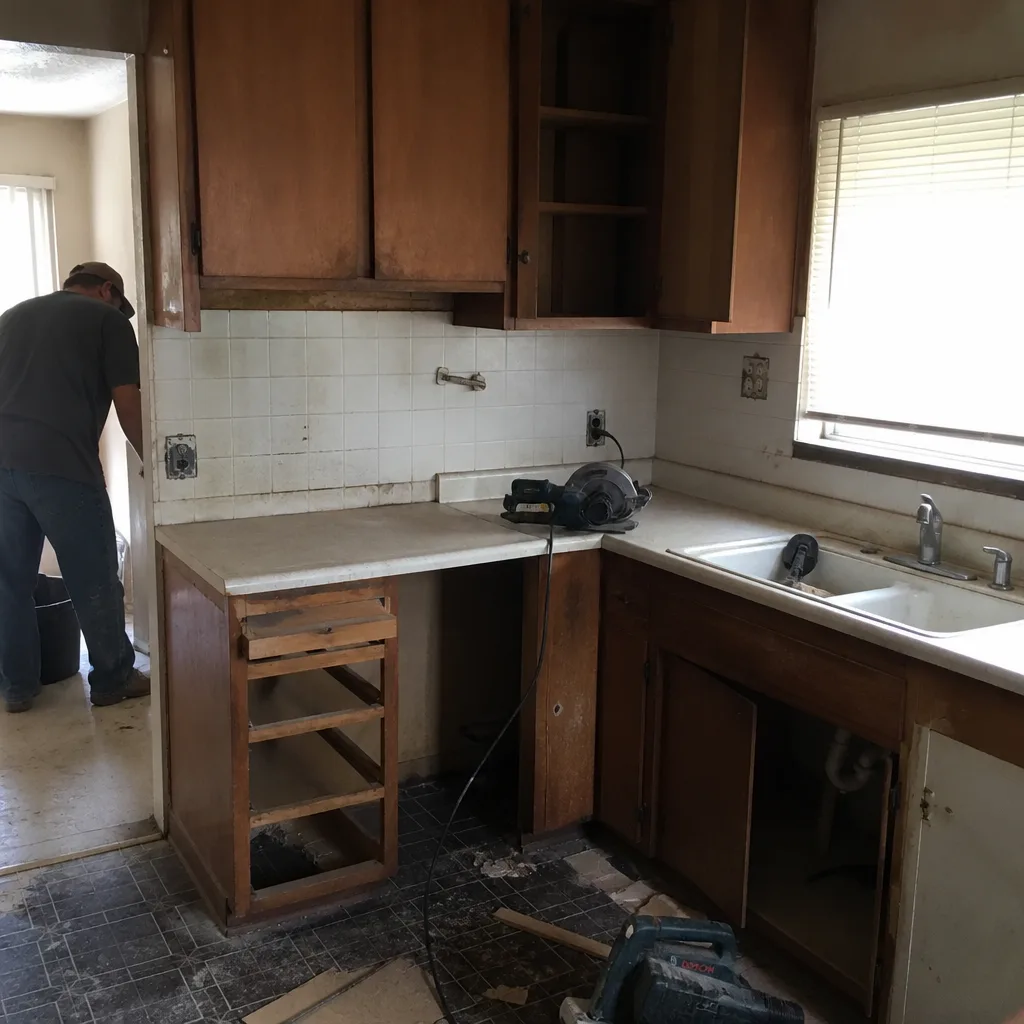 Before
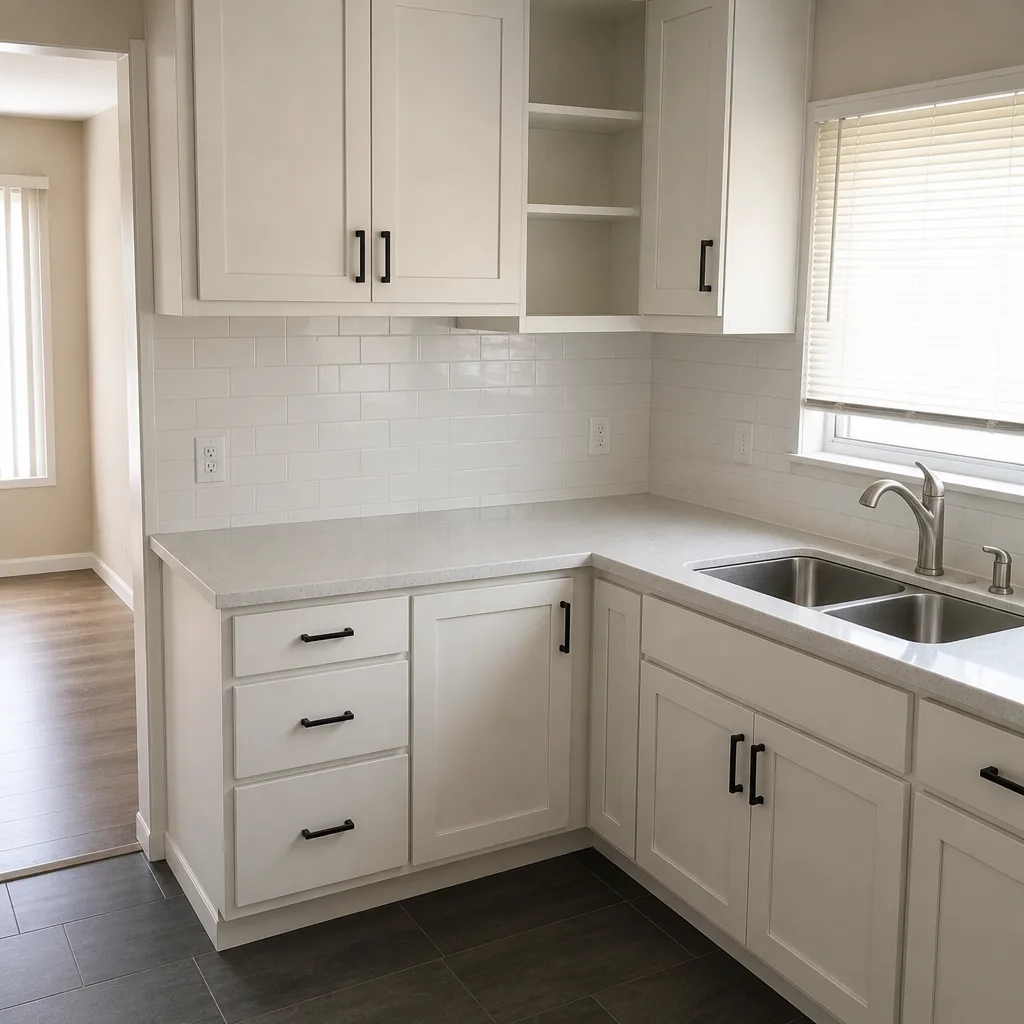 After
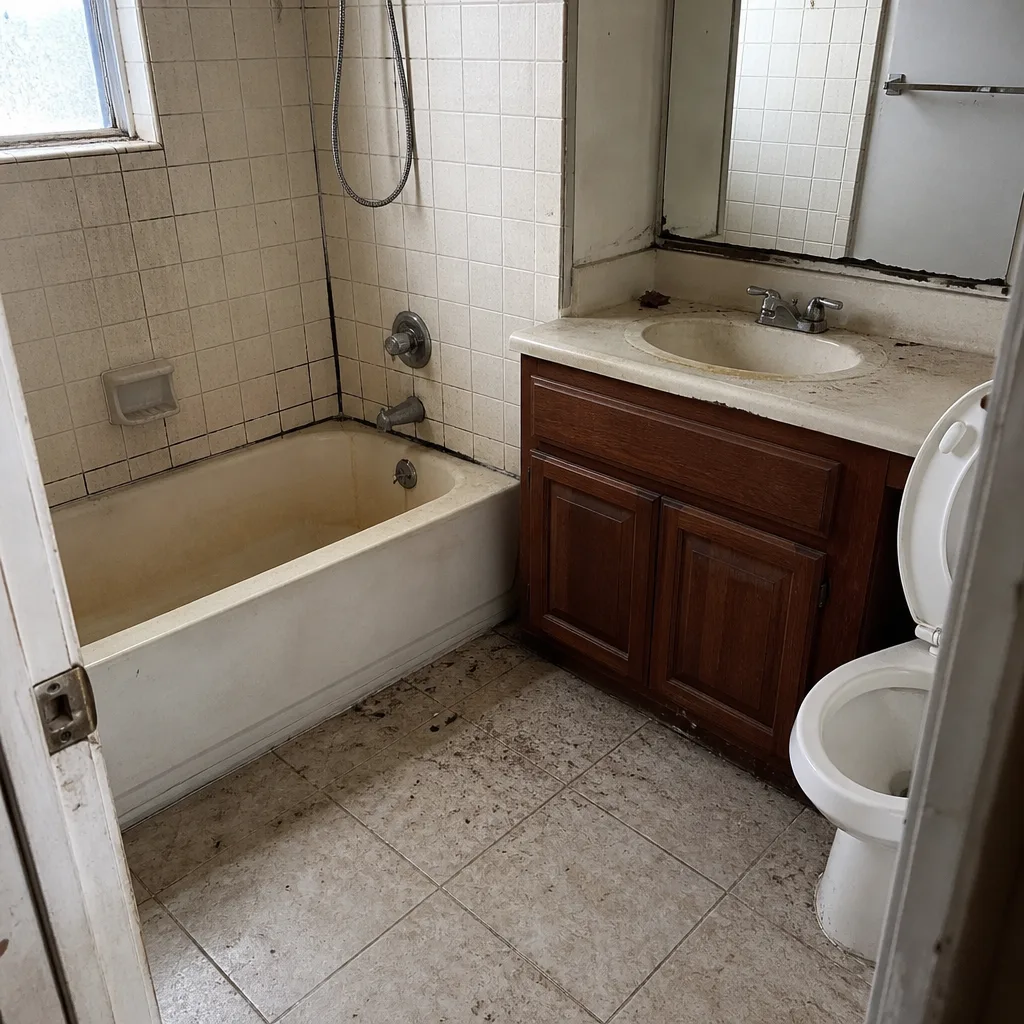 Before
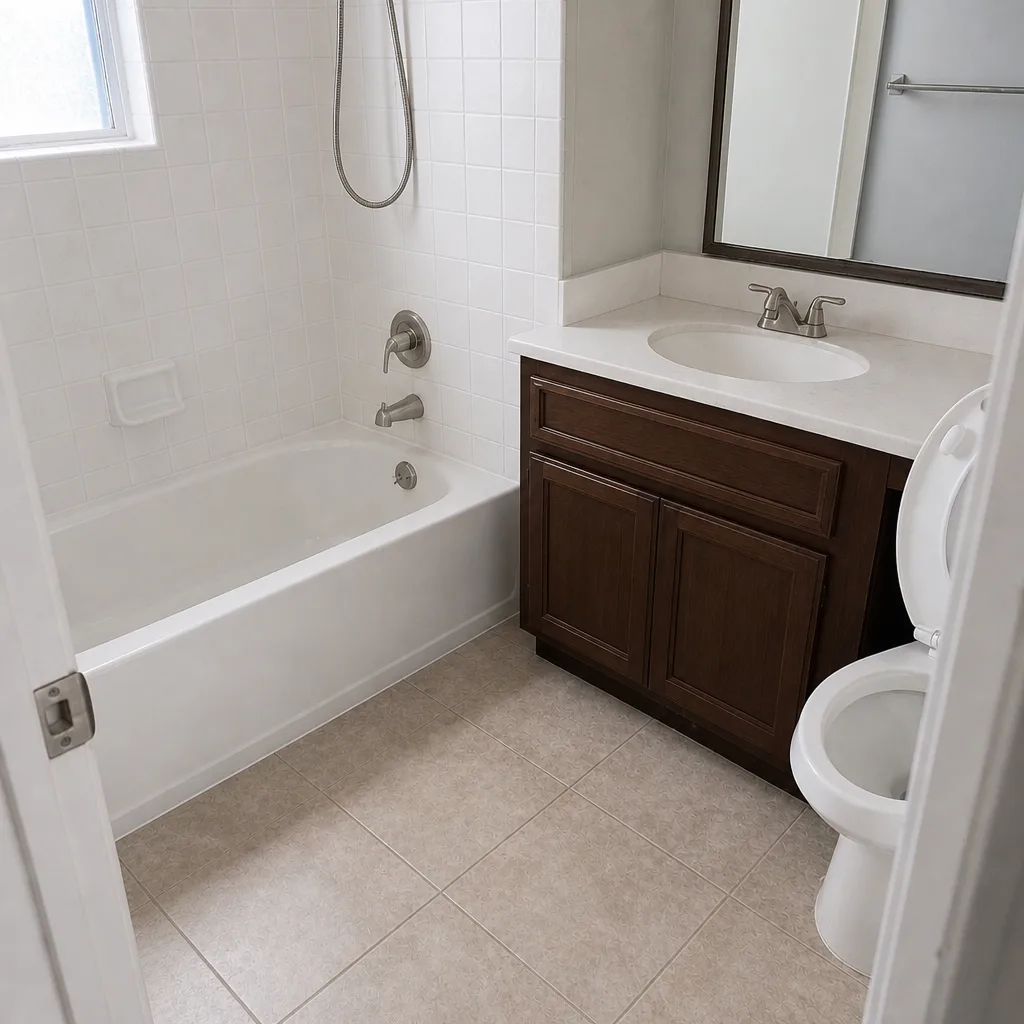 After
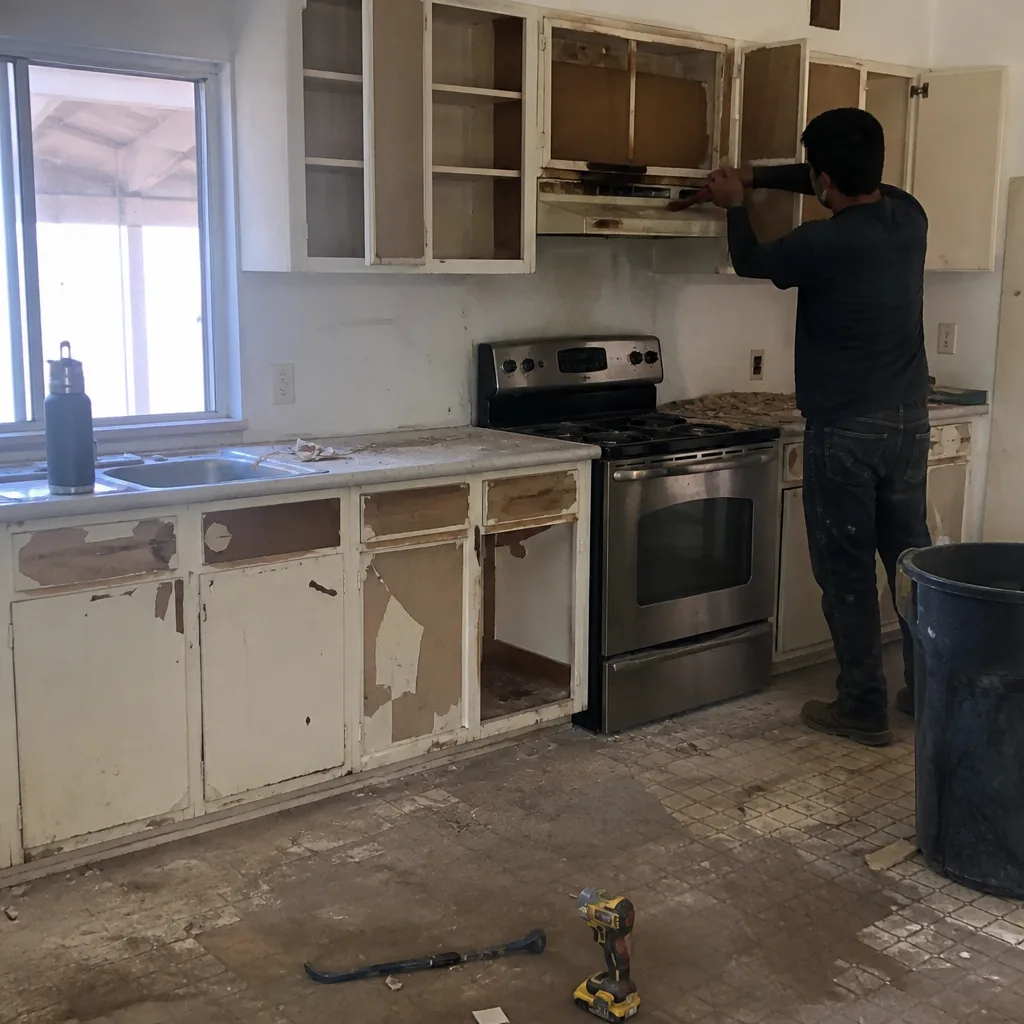 Before
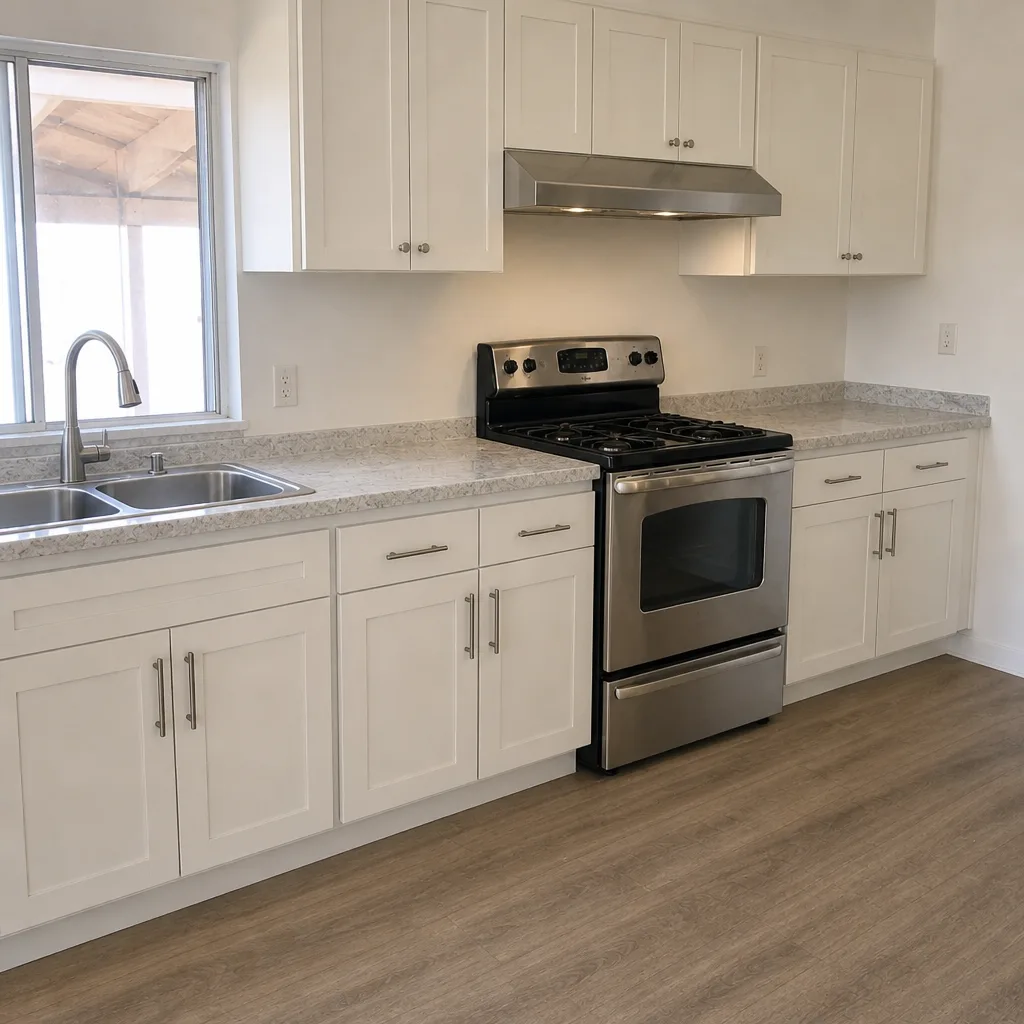 After
When to Call a Professional
Some contractor hiring decisions can wait; these can’t. Call a professional before you touch anything if the project involves structural work – a home addition, an ADU, or removing a load-bearing wall. Call if the scope spans multiple trades that need coordination, like a kitchen remodel that touches electrical, plumbing, and cabinetry at once. Call if your project requires a Clark County permit or HOA architectural submission, because the sequencing is where projects get stuck. And call if your current contractor can’t produce permit history, name their subs, or specify materials in writing. The earliest call is always the cheapest one.
Construction Whitney offers free estimates in Whitney. Call (844) 761-9669. We answer 24/7. Fast dispatch from 7am to 7pm, Sunday through Friday.
Frequently Asked Questions
Verify the contractor’s Nevada State Contractors Board license by requesting the license number and classification, then confirming both directly with the board. The classification matters because it defines what work the contractor is legally allowed to perform. Ask for permit numbers from recent projects in Clark County’s unincorporated areas and confirm those permits through the county building department. Call (844) 761-9669 to talk through your project’s verification needs with us. Estimates are free.
A Nevada State Contractors Board license confirms the contractor is legally allowed to contract for the work; a Clark County permit history shows they’ve actually pulled and passed inspections in the unincorporated areas where Whitney sits. Both matter, and the second one is often the difference between a project that flows and one that stalls. Contracts should state clearly who pulls the permit and manages inspections, and any bidder who can’t produce a permit history is a risk on your schedule.
Bids differ because the scopes behind them differ – different materials, different trades included, different allowances, different subcontracting arrangements. The right comparison method is to normalize the scopes with a one-page matrix before you look at price. Any line that’s unspecified or has an oversized allowance should be adjusted upward for a true comparison. Call (844) 761-9669 to walk through your scope with us. Estimates are free.
Ask them to walk you through the HOA architectural submission process for your specific neighborhood, in sequence. A contractor who has done this work will describe the timing, the required documents, and how it runs in parallel with the county permit. A contractor who hasn’t will pivot to price or defer to your HOA board. That single question separates a locally experienced contractor from a licensed one who’s new to the process.
Before signing, confirm the scope names every material by manufacturer and model, names every subcontractor or describes how they’ll be managed, states who pulls the permit and handles inspection corrections, defines a written change-order process, sets a payment schedule tied to milestones, and includes both manufacturer and workmanship warranties in writing. Any line reading “premium” or “standard” without a brand needs to be specified before you sign. Call (844) 761-9669 to review your scope with us. Estimates are free.
They reduce change-order risk specifically, because broad manufacturer access means the contractor can source what you actually specified instead of substituting what they happen to carry. A narrow catalog translates to more substitutions and more change orders when supply gaps hit. Ask every bidder how they source when the specified product isn’t standard to their catalog. The answer tells you how flexible your project will actually be.
The Bottom Line
Hiring a construction contractor in Whitney is a verification process, not a shopping exercise. Confirm the Nevada State Contractors Board license and its classification. Confirm permit history in Clark County’s unincorporated areas, because a valid license alone won’t tell you whether they’ve passed inspections here. Ask the five questions that surface local HOA and inspection knowledge. Read the scope for subcontracting gaps and unspecified materials. Compare bids by normalized scope, not bottom-line price. Insist on written change-order terms and milestone-based payment. Get all of it in writing before you sign. That sequence separates a contractor who’s ready for Whitney from one who just looks the part.
When you’re ready, call Construction Whitney at (844) 761-9669 for a free estimate. We answer 24/7. Fast dispatch from 7am to 7pm, Sunday through Friday. Our technicians have up to 11 years of experience, and every project is scoped in writing before any work begins.
Written by the team at Construction Whitney.