Last updated November 18, 2026





Free written scope consultation - allowances, timeline, and change-order rules on paper before a single trade is scheduled
Construction Warning Signs: A Whitney Homeowner’s Reference Guide
A diagonal crack running from the corner of a window frame is not normal settling. In Whitney, that pattern is a specific indicator of differential foundation movement, the kind the desert’s expansive clay soil is known to cause when moisture swings from one extreme to the other. It reads nothing like the hairline stucco cracks that are genuinely benign and can be ignored for years. The trouble is most homeowners can’t tell them apart, and the desert has its own failure vocabulary: spalling concrete, efflorescence blooms, UV-chalked coatings. This guide translates those signals into decisions you can actually act on.
Quick Answer
The warning signs that matter most in Whitney are diagonal stucco cracks radiating from window and door corners, interior doors that suddenly stick or won’t latch, corner-lifted or mid-dip driveway slabs, and baseboards pulling away from exterior walls. Each points to a structural or envelope problem rather than a cosmetic one. Hairline stucco crazing, uniform color fade, and tight joint cracks under an eighth of an inch are usually surface-level and can wait.
Styles & brands we work with
- Kitchen remodeling
- Bathroom remodeling
- Home additions & ADU
- Roofing
- Windows & doors
- Driveway & pavers
- Fence
Table of Contents
- Stucco Cracks: Cosmetic vs. Structural
- Foundation Heave and the Door Misalignment Clue
- Driveway and Flatwork Warning Signs
- Exterior Coating Failure: Chalking, Peeling, and Fade
- Interior Clues That Trace Back Outside
- Roof and Envelope Signals Unique to Desert Homes
- A Seven-Point Walkthrough You Can Do Yourself
- Cosmetic vs. Call-Someone: The Decision Tree
Stucco Cracks: Cosmetic vs. Structural
Stucco cracks fall into two broad families, and telling them apart comes down to direction, width, and where they start and stop. A crack is a conversation between the coating and whatever is moving underneath it. The coating tells you which.
Cosmetic cracks are typically hairline, under about the thickness of a business card, and they meander. They run in any direction, often spiderweb out from a tight corner, and they don’t grow noticeably from one season to the next. Stucco is a rigid skin over a house that expands and contracts with temperature swings, and desert temperature swings are extreme. Whitney routinely sees afternoon highs and overnight lows separated by 30 degrees or more, and no coating survives that without some hairline checking. This is normal.
Structural cracks look different. Watch for these patterns:
- Diagonal cracks running from the corners of windows or doors at roughly 45 degrees, or in a stair-step pattern
- Cracks wider than about an eighth of an inch at their widest point
- Cracks that grow from one month to the next, or that you can fit a coin into
- Horizontal cracks running along a wall, particularly near the base or where a wall meets a slab
- Cracks that appear on both sides of a wall opening, as if the opening is being pulled apart
- Offset cracks where one side of the crack is pushed out or inward relative to the other
Diagonal cracks are the highest-probability indicator of foundation movement. Hairline crazing is the lowest. Everything else sits between. If you’re unsure, mark the ends of a crack with a pencil and check the marks in 30 days. Growth is the deciding vote. If a crack has moved, call a professional to assess before you patch or paint over it, because covering the evidence makes the next diagnosis harder. Our technicians have up to 11 years of experience reading exactly these patterns in Whitney and the surrounding valley.
Foundation Heave and the Door Misalignment Clue
Most homeowners watch the exterior of the house. The best early warning system is inside, and it’s the doors. In Whitney, a door that suddenly sticks, drags on the threshold, or won’t latch is often the first sign of foundation heave, and it usually shows up weeks or months before you can see a crack outside.
The mechanism is specific to desert soil. Whitney’s soils contain expansive clay, which swells when it absorbs water and shrinks when it dries. Irrigation is the driver. A leaky hose bib, a sprinkler line weeping under the slab, or a landscape bed that gets watered heavily on one side of the house creates a moisture differential across the foundation. The swollen side lifts; the dry side doesn’t. The slab tilts slightly, the wall above it tilts with it, and the door frame goes out of square. The door binds.
Signs to watch for inside:
- Interior doors that stick, scrape, or need extra force to close, especially in one part of the house
- Doors that swing open or closed on their own when left partway
- Deadbolts that no longer line up with their strike plates
- Windows that are hard to open in one room but fine elsewhere
- Floors that feel slightly uneven underfoot, or a noticeable slope toward one wall
- Diagonal cracks in interior drywall near door corners
Check the irrigation first. A surprising share of heave investigations in Whitney begin and end with a leaking zone line on one side of the house. If you shut down the zone and the doors free up within a few weeks, you’ve found your cause. If they stay bound, or the problem spreads, it’s time for a proper evaluation. Never ignore a door that used to close and doesn’t anymore. It’s the cheapest diagnostic you’ll ever get.
Driveway and Flatwork Warning Signs
Concrete flatwork in Whitney lives on a sub-base that moves. Expansive clay, heat, and sun exposure all put stress on a driveway or patio slab that the same pour in a wetter climate would never see. Three patterns are worth understanding, and each one means something different.
Corner Lifting
When a slab’s corner lifts, you’ll see a step where the corner meets the adjacent slab or the garage apron. It’s often driven by moisture under one corner swelling the sub-base, or by a tree root pushing up. A small lift under a quarter inch can be cosmetic. Anything larger, particularly at the garage-door transition, is a trip hazard and a sign the sub-base is behaving badly. Left alone, the lift usually gets worse.
Mid-Slab Dipping
A dip in the middle of a slab shows up as ponding after rain or irrigation. It often means the sub-base under that section has settled or washed out. In Whitney, a dip near a downspout or a landscape bed is often a drainage problem masquerading as a concrete problem. Fixing the concrete without fixing the water source just buys you a repeat.
Joint Widening
Control joints are supposed to be there, but they shouldn’t be growing. A joint that’s visibly wider than the others, or that shows soil through it, suggests slabs are separating. That can be settlement, sub-base erosion, or pressure from a root. Widening joints along with corner lifting is a pattern worth a professional look.
Any of these patterns can be addressed by reconstruction, overlay, or full replacement depending on the cause and the layout. When you’re ready to talk materials, the paver ecosystem we work through includes Unilock, Tremron, and Techo-Bloc, which gives you real options beyond a straight concrete replacement. See our driveway & pavers service for how we sequence that work.
Exterior Coating Failure: Chalking, Peeling, and Fade
Desert sun is relentless on exterior coatings, and the three failure modes tell you different things. Chalking, peeling, and fade are not the same problem, even when they appear together. Chalking looks like a white powder that rubs off on your hand when you slide it along the wall. It’s the surface of the coating breaking down, and it’s a sign the topcoat is past its useful life. It’s not damage to the wall underneath, but it does mean the coating is no longer doing its job protecting the stucco from sun and moisture.
Peeling and blistering are different. Where the coating has actually separated from the substrate, you likely have a moisture problem behind it, or a bonding failure from the original application. In Whitney, peeling near the bottom third of a wall often traces to irrigation overspray or soil contact. Peeling on an upper wall usually traces to an underlying stucco defect or a previous patch that didn’t bond. Both need investigation, not just a fresh coat over the top. Painting over an active moisture problem traps it and accelerates the failure.
Color fade is the least alarming of the three. Desert UV will bleach a south or west wall faster than the north side, and side-to-side color difference is normal as a coating ages. What’s not normal is a sharply defined fade pattern, tinting that looks blotchy, or a coating that has gone chalky in patches. Those point to a product applied unevenly, or to a substrate that wasn’t properly prepared.
Signs that you’re past a simple recoat:
- Coating chalk and color fade in irregular patches rather than toward the sun-facing side
- Peeling that comes back within a year of the last paint job
- Efflorescence, the white salt bloom that appears on stucco even when the wall appears dry
- Coatings that bubble after rain, then flatten back out
- Visible cracks under the coating that continue to widen
Efflorescence deserves a special note in Whitney’s alkaline soil. Water migrating through stucco carries dissolved salts to the surface, and when it evaporates, the salts stay. The bloom is the symptom; the water path is the problem. Cleaning the bloom without stopping the moisture guarantees it comes back.
Interior Clues That Trace Back Outside
Most of the interior warning signs we get asked about in Whitney are actually exterior construction failures showing up inside. Baseboards separating from walls, grout cracking in a grid pattern, drywall nail pops near exterior walls, doors that need rehanging twice – these are conversations between the outside of the house and the inside, and they’re reading differently than they would in a wetter climate.
Baseboards pulling away from exterior walls. A baseboard with a visible gap along the top edge that appears suddenly is usually the wall moving. In Whitney, this most often traces to a foundation issue, but it can also follow a big seasonal moisture swing. A gap that opens in summer and closes in winter is benign. One that opens and stays open needs a look.
Grout cracking in a grid pattern. Tile grout cracking in a grid pattern is an indicator of slab movement. Floor tile that cracks in a straight line is one thing; tile cracking in a repeating grid pattern across a room usually means the slab beneath is moving in more than one direction. In a Whitney bathroom, this often precedes or accompanies a foundation issue, and it deserves the same evaluation you’d give an exterior diagonal crack.
Drywall nail pops near exterior walls. A nail pop is a small bump where the drywall screw or nail has backed out slightly. One or two under a window are common and usually cosmetic. A cluster along an exterior wall, especially if it appeared together, means the wall has moved relative to the framing. That’s still often benign in a desert climate, but a cluster along a wall that also has a visible diagonal crack outside is a different story. The two together are a strong signal of movement, and worth a professional assessment.
Efflorescence on interior walls. Less common, but worth knowing. If a white salt bloom appears on the inside of an exterior wall or at the base of a stem wall, water is migrating through the envelope. In Whitney that’s usually irrigation-related, but it can also trace to a roof or window leak that’s been slow and silent.
Roof and Envelope Signals Unique to Desert Homes
Desert roofs fail differently than roofs in wetter climates. The usual suspects – sagging, missing shingles, obvious active leaks – still apply, but the patterns that show up in Whitney often look more like heat damage than water damage. Roofing in this climate is judged less by how it handles rain and more by how it handles 40 years of sun and 60-degree swings between day and night.
Watch for these:
- Curling, cracking, or “alligatoring” shingles, especially on south- and west-facing slopes. Desert sun cooks asphalt shingles faster on the sun-facing planes, and a roof that’s fine on the north side can be spent on the south.
- Granule loss showing up in gutters or at the bottom of downspouts. Heavy granule loss means the shingle surface is aging out and UV is now attacking the asphalt beneath.
- Visible dips or waviness in the roof plane when you sight down a ridge. This can mean underlayment has failed, decking has softened, or a previous patch is failing.
- Staining on ceiling drywall, especially in concentric rings or along the interior of an exterior wall. In a desert, a roof leak may show up months after the storm, because the water sometimes migrates slowly and evaporates before it penetrates to the ceiling.
- Flashing pulling away at chimneys, skylights, and wall transitions. Flashing is where most leaks start, and sun degrades the sealant that holds it long before the shingles fail.
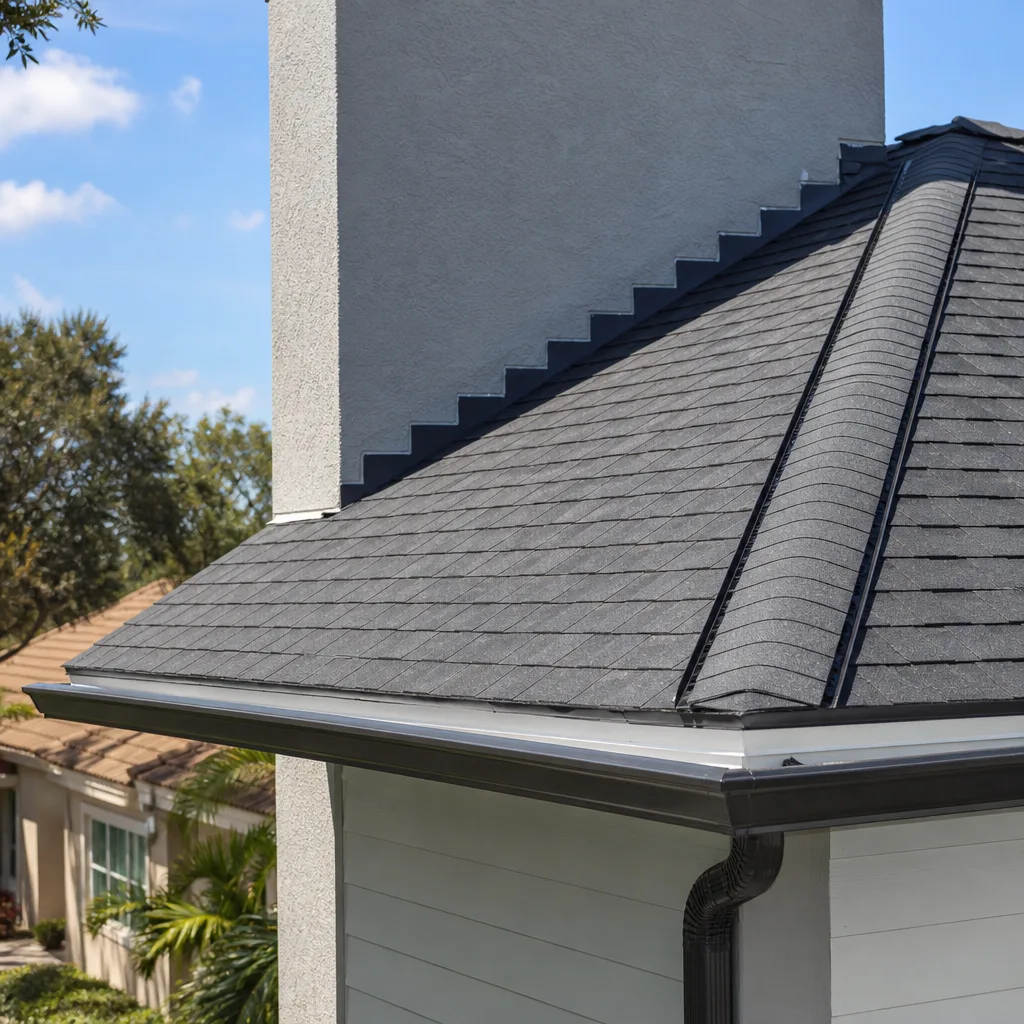
Roofing materials matter for the long haul in this climate. The manufacturers we routinely work through include GAF, CertainTeed, and Owens Corning, and each has product lines designed with different heat ratings and warranty structures. Picking the right one for your home’s orientation is part of the conversation, not an afterthought. If you want to look at options, our Construction Whitney team can walk you through the roofing, window, and siding side of the envelope at once.
A Seven-Point Walkthrough You Can Do Yourself
You don’t need a professional to do a first pass. Set aside an hour, walk the outside of the house, then walk the inside, and write down what you see. The order matters, because the interior signs make most sense once you’ve looked at the exterior.
- Walk the perimeter and look for diagonal cracks. Focus on corners of windows and doors, and where walls meet the slab. Note the direction, width, and location of any crack you find.
- Check all four sides of the driveway and front walk. Look for corner lifts, dips (watch for standing water after irrigation), and joints that are visibly wider than their neighbors.
- Sight down the walls. Stand at one corner of the house and look along the wall plane. Any visible bow or wave is worth noting.
- Look up at the roof from a distance. From the street or the far side of the yard, sight the ridge line and look for dipping, waviness, or darkened patches. Don’t walk the roof; a fall from roof height is a serious injury and not worth the view.
- Check the coatings. Rub a wall with your hand and see if chalk comes off. Look for peeling near the bottom of walls, especially around irrigation heads.
- Inside, open and close every door and window. Note any that bind, drag, or don’t latch correctly. This is your foundation check, and it’s free.
- Walk the interior walls and look at the trim. Check baseboards for gaps at the top, look for nail pops along exterior walls, and note any tile grout that has cracked, especially in a grid pattern on the floor.
Write it all down with dates. A crack marked and measured today gives you a real comparison in six months, and it’s also the kind of record that helps a professional assess things quickly. In our experience, the homeowners who document their walkthroughs get faster, more accurate answers from the first phone call.
Cosmetic vs. Call-Someone: The Decision Tree
Not every sign requires the same response. Here’s how we think through the call in practice:
Monitor and re-check in 30 days:
- Hairline stucco cracks under a business card’s thickness that aren’t growing
- Uniform color fade on the sun-facing side of the house
- One or two nail pops under a window
- Baseboard gaps that appear in summer and close back up in winter
Book an assessment:
- Diagonal cracks from a window or door corner
- Cracks wider than an eighth of an inch, or that grow between checks
- Doors that stay bound after you’ve checked the irrigation
- Peeling coating that returns within a year of a repaint
- Efflorescence that keeps coming back after a cleaning
- Corner lifts or mid-slab dips in the driveway
- Grout cracking in a grid pattern on a tile floor
Don’t wait on it:
- Any crack that has offset, with one side pushed out or in
- A roof with active water staining or a shingle surface that’s gone chalky and crumbly
- A foundation concern that’s spreading to more than one room
- Anything that’s a trip hazard at the garage-door transition
None of this replaces a professional assessment, because the exact cause of a given crack can only be confirmed after looking at the whole house. But it does give you a way to triage, so you’re neither panicking over a cosmetic crazing nor ignoring a real problem.
See the difference
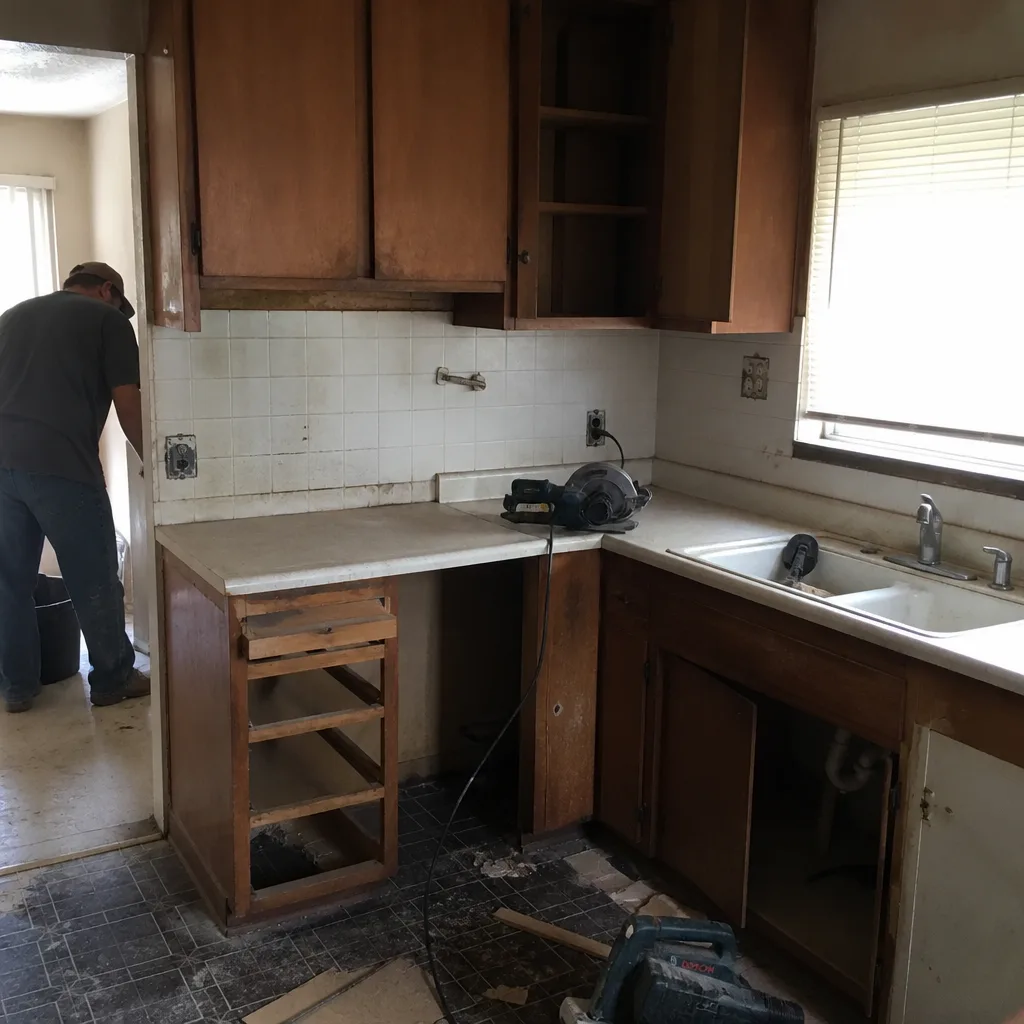 Before
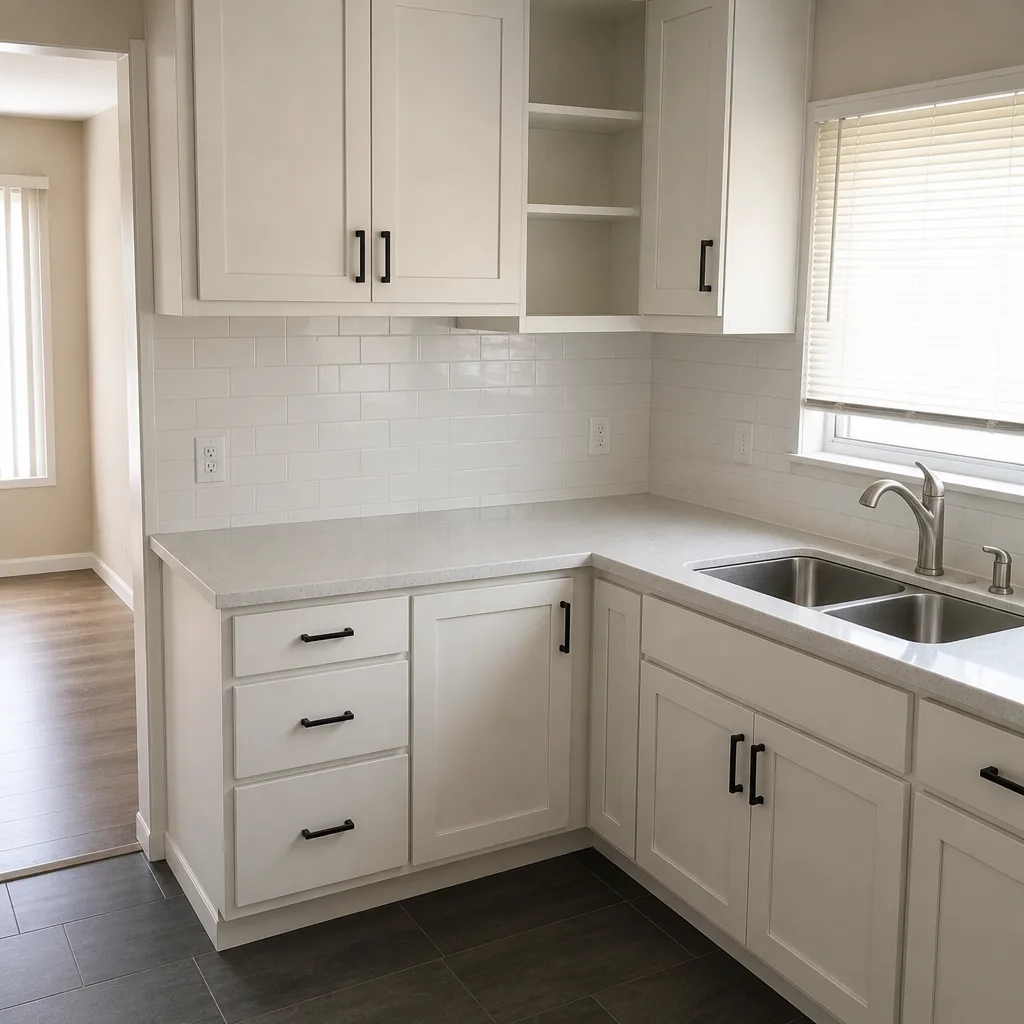 After
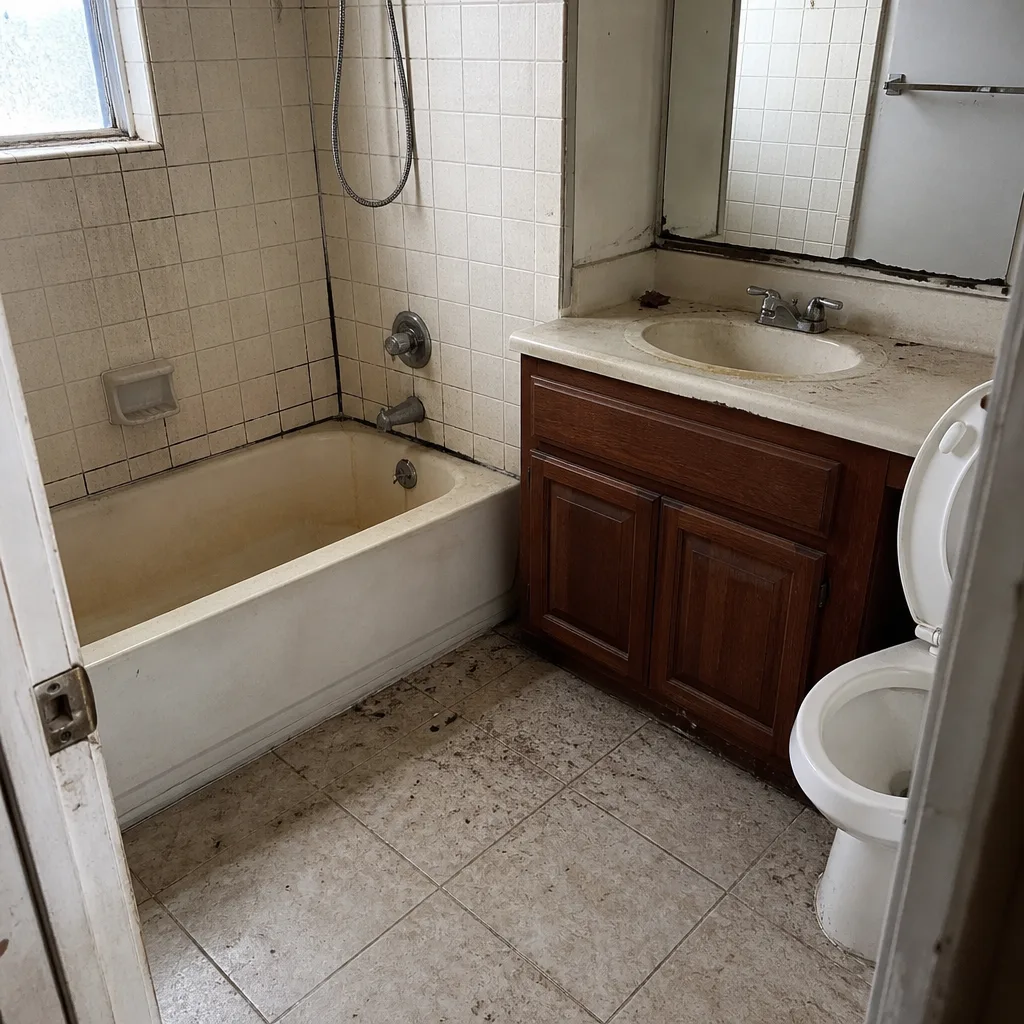 Before
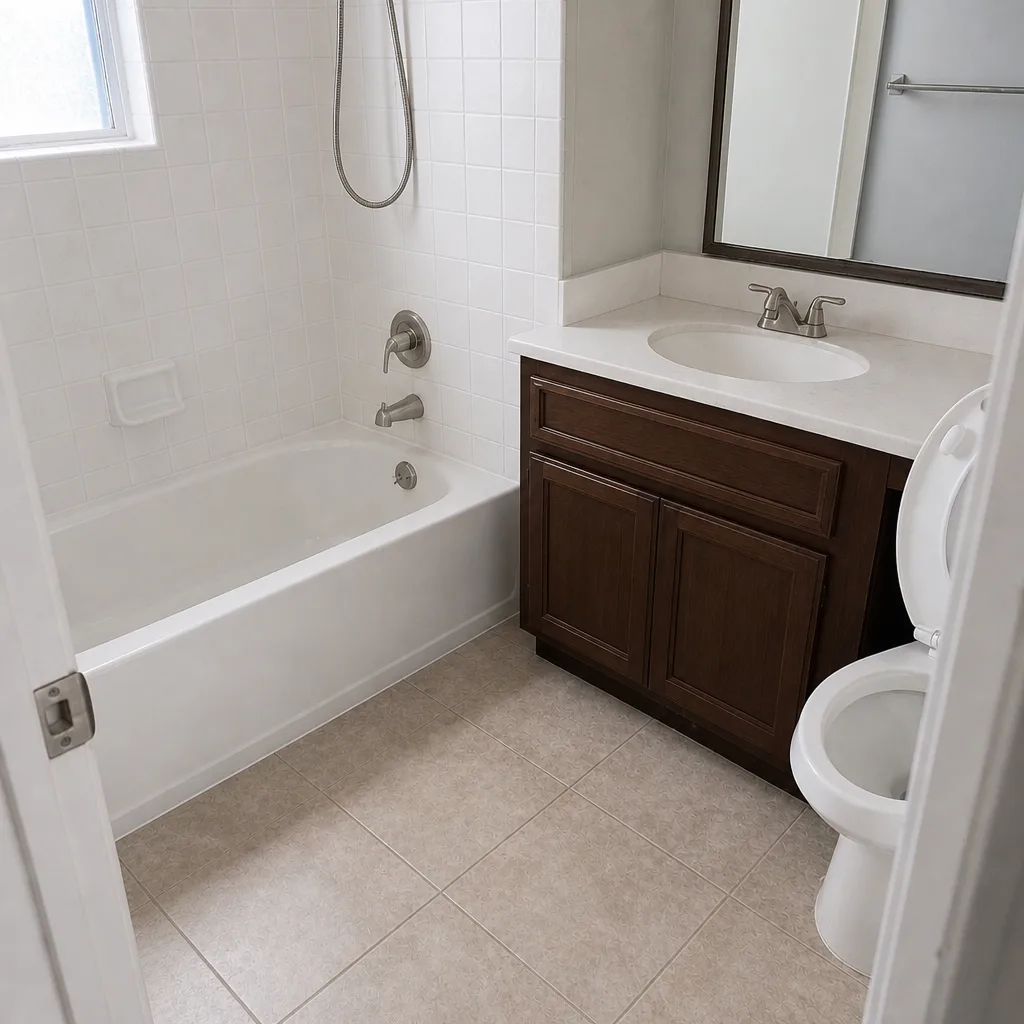 After
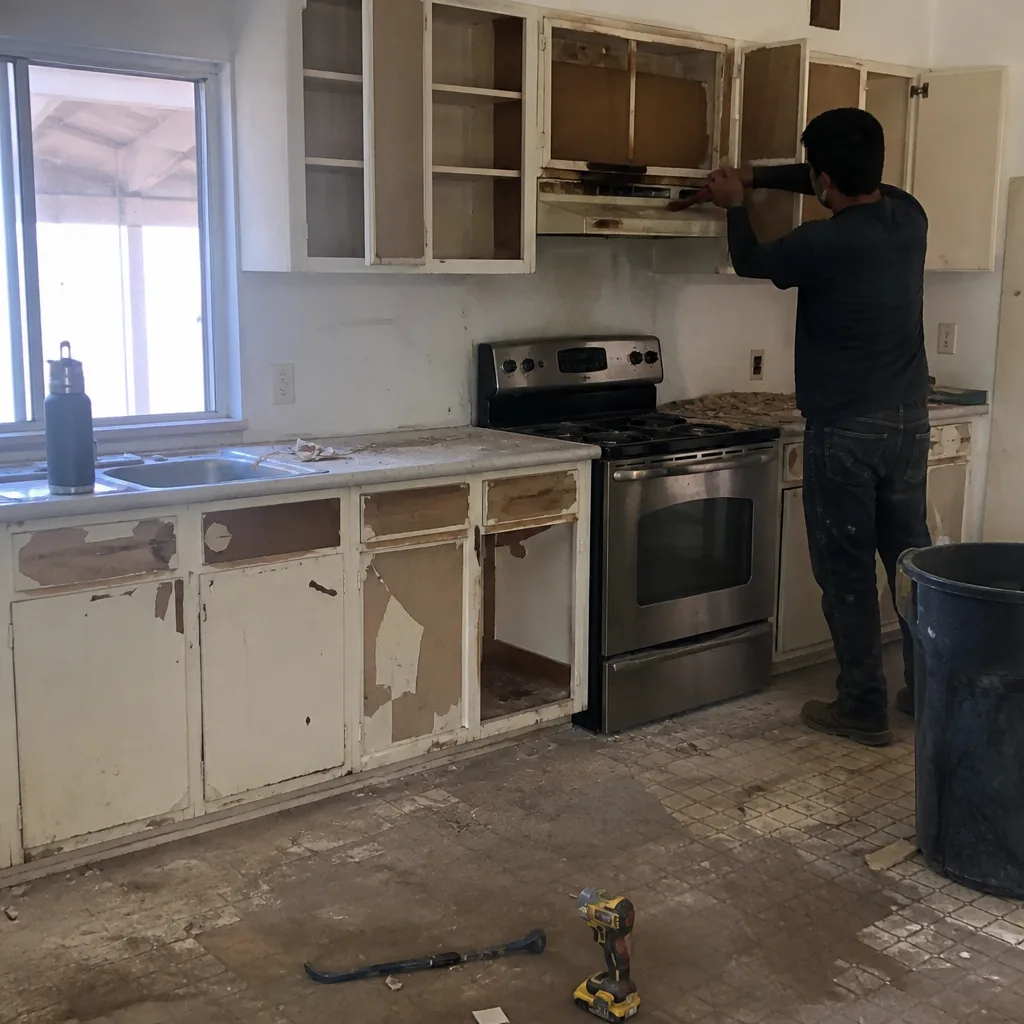 Before
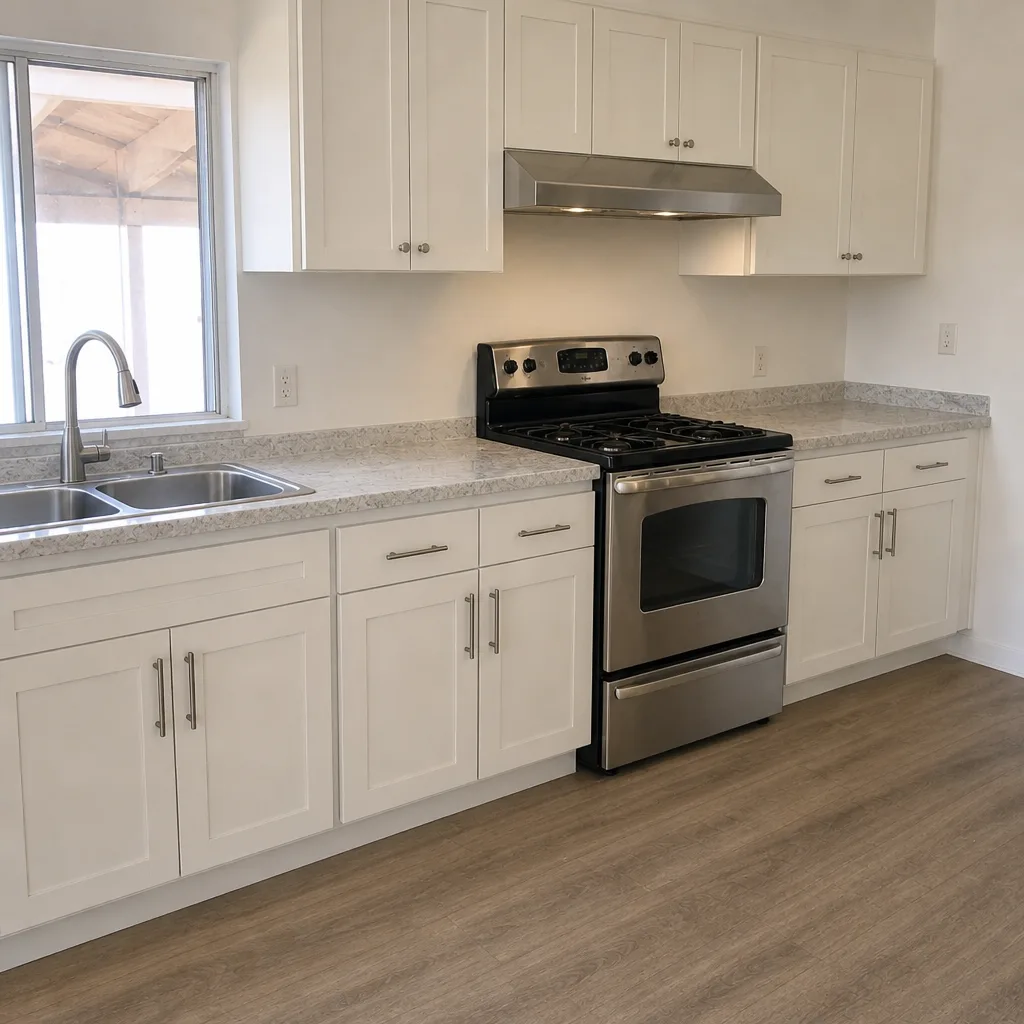 After
Common Mistakes to Avoid
- Patching a diagonal crack without diagnosing it. Stucco patch looks fine for a season, then the same crack reappears. The patch hides the evidence, and now the next person has to guess where the movement started.
- Ignoring a sticking door because the wall “looks fine.” A bound door in Whitney often appears well before any visible exterior crack. It’s the cheapest foundation warning a homeowner gets.
- Repainting over peeling coating. A fresh coat over an active moisture problem fails within a year and can make the underlying damage worse. Find the water source first.
- Sealing a driveway with a crack showing soil. If soil is visible through a joint, the slab is separating, and a sealer will not fix that. Structural repair is the answer, not a coating.
- Skipping the irrigation check after a foundation warning. In Whitney, a large share of interior movement signs trace to a leaking zone line on one side of the house. It’s the first thing to check, not the last.
- Cleaning efflorescence without stopping the water. Salt bloom cleaning is a temporary fix. If water migration hasn’t been stopped, the bloom returns within one wet season.
- Walking the roof to check it. A fall from roof height is a serious injury. Sight the roof from the ground and call for anything that requires getting on it.
When to Call a Professional
Call for a professional assessment if any of these apply: a diagonal crack radiating from a window or door corner that has grown between checks; a door that stays bound after the irrigation has been ruled out; a driveway corner lift that has become a trip hazard; peeling coating that came back after a repaint; grout cracking in a grid pattern across a floor; efflorescence that keeps coming back; or a roofline that’s visibly dipped. None of these are emergencies in the sense of a burst pipe, but they’re all problems that get more expensive with time, and none of them get cheaper by waiting. There’s also a category of thing you should never DIY: anything involving roof-height work, gas lines, or electrical panels requires a trained professional, and the safety risk of getting it wrong is not worth the savings. Construction Whitney offers free estimates in Whitney. Call (844) 761-9669. We answer 24/7. Fast dispatch from 7am to 7pm, Sunday through Friday. Whether the concern is foundation-adjacent or purely exterior, the written estimate sets the final price, and you get a line-item quote before any work begins.
Frequently Asked Questions
A stucco crack is structural when it’s diagonal from a window or door corner, wider than about an eighth of an inch, growing between checks, or showing an offset where one side is pushed out. Hairline cracks under a business card’s thickness that meander and don’t change are usually cosmetic. If you’re unsure, mark the ends and re-check in 30 days. Call (844) 761-9669 for an assessment – estimates are free.
Interior doors that suddenly stick in Whitney most often point to foundation movement from expansive clay soil and an uneven irrigation pattern. When one side of the foundation absorbs more water than the other, the slab tilts slightly, and the door frame goes out of square. Check for a leaking irrigation zone on that side of the house first. If the doors don’t free up within a few weeks, it’s time for an assessment.
White powder that rubs off on your hand is chalking, which means the coating itself is breaking down under UV exposure. A patchy white bloom that looks like salt crystals is efflorescence, which means water is migrating through the stucco and carrying dissolved salts to the surface. Chalking is a recoat signal; efflorescence requires finding the water source first. Call (844) 761-9669 to have both looked at together.
A driveway corner lift under about a quarter inch on a low-traffic slab can be cosmetic. Anything larger, especially at the garage-door transition, is a trip hazard and usually a sign of sub-base moisture or a root issue. Left alone, corner lifts tend to grow. Get it evaluated before it becomes a replacement rather than a repair – our driveway & pavers team can look at reconstruction and paver options.
That depends on the shingle line, the roof’s orientation, and ventilation, but desert sun typically shortens service life on south- and west-facing planes compared to the north. Watch for curling shingles on those planes, granule loss in the gutters, and water staining on interior ceilings, which can appear months after a storm in this climate. Call for a free roofing assessment if you see any of those.
You can patch hairline cosmetic cracks and repaint chalking coatings, and that’s a reasonable move for a benign signal. You cannot safely patch a growing diagonal crack, a peeling coating that came back after a repaint, or grout that’s cracked in a grid pattern; those all point to movement or moisture that a patch will hide and make harder to diagnose. Diagnose first, then decide whether the repair is a patch or something more.
The Bottom Line

Whitney’s desert climate gives homeowners a slightly different set of construction warning signs than a wetter region would, and the biggest mistake is reading them through a wet-climate lens. Diagonal stucco cracks radiating from a window corner are structural, hairline crazing is cosmetic, and a door that suddenly binds is often the earliest foundation clue you’ll get. Corner-lifted driveways, chalking that reappears after a repaint, and grout cracking in a grid pattern are all worth a professional look. Document what you see, check the irrigation first, and never walk a roof. When the list has anything structural on it, get the assessment. Contact Construction Whitney at (844) 761-9669. We answer 24/7. Fast dispatch from 7am to 7pm, Sunday through Friday. Estimates are free, the quote is written and line-item, and the estimate sets the price.
Written by the team at Construction Whitney.